

Mazurkas by DORMAN, M.P. GORECKI, BENGSTON, WOS, GILL, LASKO, NOGUERA PALAU, KANIOWSKA, GERMAN, KULENTI, FORTMANN, PYKA, RAKOWSKI, STROINSKI, VIGELAND, MUNIZ, RITCHIE, YOUSUFI, BLECHARZ, BLOCH BONHOFF
This unique CD presents 25 mazurkas by 20 different composers commissioned by Polish-American pianist Anna Kijanowska for her project aimed at preserving and reviving the art of the Polish mazurka.
Mazurkas have a long and storied history. Contrary to popular belief, the word “mazurka” did not originate in Poland. It is a Western term used to describe three similar but distinct Polish folk dances in triple meter—mazur (or mazurek), oberek, and kujawiak. These dances were known as early as the 16th century, but the word “mazurka” first appeared in Joseph Riepel’s music dictionary, published in Germany in 1752. Originating in the Mazovia region of central Poland, the mazurka evolved from a lively folk dance into one of the defining musical genres of the Romantic era. It is distinguished by its triple meter, characteristic accents on the second or third beat, and rhythmic flexibility inherited from folk performance. By the late 18th century, the dance had become a favorite of the Polish nobility and soon spread throughout Europe, where composers began producing stylized mazurkas for the salon and concert hall.
The mazurka reached its artistic pinnacle in the hands of Frédéric Chopin, who transformed its Polish dance rhythms into a deeply personal and sophisticated art form combining harmonic innovation, rhythmic subtlety, and emotional depth. While Chopin remains the undisputed king of the mazurka, many other prominent composers made worthy contributions to the genre, among them Szymanowski, Paderewski, Tchaikovsky, Liadov, Scriabin, Dvořák, Debussy, and many others.
Very popular in the 19th and early 20th centuries, the mazurka fell into obscurity soon after World War II, and Anna Kijanowska’s project attempts to revitalize the genre. She has assembled a truly international cast of composers for this album. They come from the United States (Jeremy Gill, Matthew Bengtson, David Rakowski, Nils Vigeland, John Muniz), Israel (Avner Dorman), Colombia (Carolina Noguera Palau), Ukraine (Lyudmila German), Switzerland (Thomas Fortmann), New Zealand (Anthony Ritchie), Afghanistan (Milad Yousufi), Germany (Thomas Bloch Bonhoff), and, of course, Poland (Mikołaj Piotr Górecki, Łukasz Woś, Agnieszka Lasko, Małgorzata Kaniowska, Hanna Kulenty, Karol Pyka, Mikołaj Stroiński, Wojtek Blecharz).
Only eight of the 20 composers on this album have entries in the Fanfare Archive, and none of them can be considered household names. Łukasz Woś, Avner Dorman, and Mikołaj Piotr Górecki (son of Henryk Górecki) were the only three composers familiar to me. Nevertheless, the music on this CD is of high artistic quality and offers a wide variety of styles. We have the quite Chopinesque entries by M. P. Górecki and Agnieszka Lasko, Impressionistic works by Lyudmila German and Hanna Kulenty, the Jazz Mazurka by Karol Pyka, the sonoristic Mazurka for Solo Piano by Carolina Noguera Palau, the polystylistic Three Mazurkas by Thomas Fortmann, and the avant-garde Mazurka for Piano and 3 Wireless Speakers by Wojtek Blecharz, as well as Grenzland by Thomas Bloch Bonhoff. The size constraints of a single review do not allow me to discuss each composition in detail, but while this album may not contain any groundbreaking masterpieces, all the pieces are well crafted, lively, and entertaining.
It is hard to imagine these mazurkas being played any better. Kijanowska is an accomplished pianist, educator, and champion of Polish music. She is a graduate of the Karol Szymanowski Academy of Music in Katowice, the Karol Lipiński Academy of Music in Wrocław, and Boise State University. She holds a doctorate and a Master of Music in Piano Performance from the Manhattan School of Music in New York and currently is a professor of piano at the University of Silesia in Cieszyn, Poland. Kijanowska has a special affinity for mazurkas, having previously recorded an album of Szymanowski’s complete mazurkas (DUX 0417), which was enthusiastically reviewed in 29:6 by Adrian Corleonis, and another disc, Polish Mazurkas (DUX 1868), which was not reviewed in Fanfare.
The recorded sound is rich and vivid. The CD comes in a tastefully designed digipak with an informative booklet in English and Polish and provides almost 78 minutes of pure delight. Recommended without any reservations. Anton Angelo
This article originally appeared in Issue 50:2 (Nov/Dec 2026) of Fanfare Magazine.
“The Role of Music and Fine Arts in the Modern World”
28–29 June 2026 | Cieszyn, Poland | Hybrid Format
The MusicAlive project, initiated by Dr. Anna Kijanowska and Agnieszka Lasko, began as an
international initiative including the International Piano Competition, the International Piano
This edition continues the MusicAlive initiative and grows out of the experiences and
conversations of our past conferences.
MusicAlive brought together performers, educators, researchers, and arts professionals who
share a passion for music and the arts.
Both artists represent an important but insufficiently visible part of the history of women in music. Through this project I am bringing their music into contemporary performance and examining their artistic legacy through the perspective of a pianist
and performer.
https://m.youtube.com/channel/UCy9JLLJGFNnVHumiDqc1b0Q
https://open.spotify.com/album/4lNQ3fP9SGjpwKBi3qid3G?si=CNQDEL8eSp2JmEv6DxfQkQ
https://www.youtube.com/watch?v=sovWMw0BhAc&list=RDsovWMw0BhAc&start_radio=1
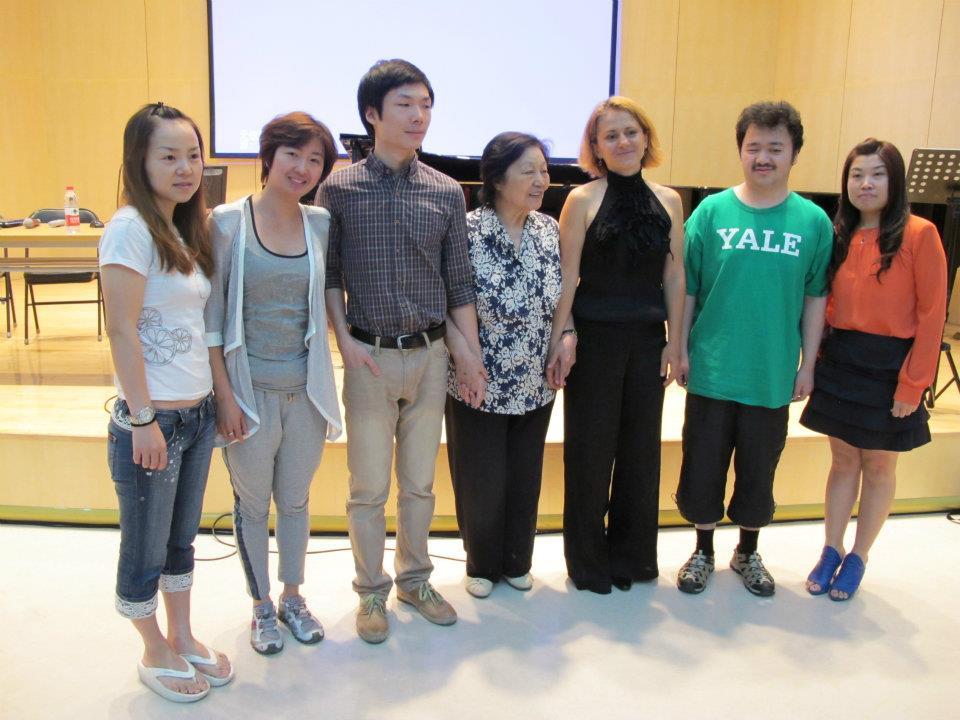
The event program included topics related to creativity in teaching, improvisation, working with the Fortepian pierwsza klasa textbook, as well as American pedagogical methods: from working with students on the autism spectrum and injury prevention, to modern educational tools. The course featured lectures and repertoire presentations devoted to, among others, mazurkas and nocturnes – from Chopin to the present day.
“Silesia – New Eden” is an ambitious music-and-visual spectacle that employs a wide range of visual and sonic artistic forms, as well as pantomime, to construct a profound narrative about the role of culture and art in the ongoing processes of global transformation. The project is inspired by the region of Silesia, which—despite its industrial past—is currently undergoing a transformation toward sustainable development.
The original music for the performance is composed, among others, by the distinguished Swiss musician and composer Thomas Fortmann. The musical layer will be performed by Dr hab. Anna Kijanowska, Prof. of the University of Silesia, Dr hab. Małgorzata Kaniowska, Prof. of the University of Silesia, and the instrumental ensemble “New Eden Project.” The animations and graphic design are created by Prof. Małgorzata Łuszczak.
The aim of “Silesia – New Eden” is to create an artistic narrative in the form of a multimedia performance that addresses the issues of sustainable development and a “Green Future” through the use of various musical, visual, and pantomimic art forms. The project tells the story of Silesia’s transformation from an industrial region into a hub of culture, ecology, and science, emphasizing the importance of a harmonious relationship between humans and nature.
The performance combines diverse artistic forms—such as music, graphic art, animation, and pantomime—to convey the richness and complexity of this transformation. Inspired by nature and its regeneration, the project symbolizes new life and a new quality emerging in a region where nature becomes as significant as its industrial heritage.
The project will increase ecological awareness through a multi-layered narrative that integrates music, animation, and visual art, engaging audiences with key ecological and social issues.
By drawing on local cultural contexts and promoting the Silesian region as a space of sustainable development, the performance will contribute to strengthening local identity and building a positive image of Upper Silesia.
originally featured an International Piano Competition and an International Piano and
Music Education Symposium. The next installment of the project is the MusicAlive
International Conference: The Role of Music and Fine Arts in the Modern World.
The conference offers a unique opportunity to delve into the influence of music and
art on society in the contemporary era. This international initiative aims to highlight
cultural diversity by presenting various musical genres and artistic forms from
different corners of the world.
MusicAlive International Conference emphasizes openness to exploring other
cultures and arts, fostering social inclusion. Examples of topics include
experimenting with the fusion of different musical traditions or collaboration between
people from various cultures. In this way, culture becomes a bridge that connects
different nations and communities. In today’s globalized world, art is the key to
building unity and understanding among people. At this level, we can seek
community with other cultures, learning tolerance and coexistence.
29 dance miniatures arranged in chronological order show the evolution of the genre over more than 180 years. The mazurka, closely related to the oberek and the kujawiak, has been danced in Poland since the early Middle Ages. In spite of its rural origin, it cemented its popularity not only at weddings; during the partitions, composers would reach for it to manifest their patriotic attitude. The number of works presented on the album proves the immense popularity of mazurkas, and yet neither Zarebski, Moszkowski, Maciejewski nor their most famous creators - Chopin and Szymanowski - are present here. However, echoes of their output can be heard in many compositions.
Anna Kijanowska, a Polish-American pianist involved in the popularization of Polish music through performances on several continents, once again proves that mazurkas are extremely close to her. She shows their beauty and character in a subtle and balanced style. In earlier compositions, folk references take on a rather restrained, veiled form. A genuine kaleidoscope of ideas, interesting harmonic, melodic and textural solutions is hidden in later works, i.e. Neoromantic and contemporary. The mazurka turns out to be an inexhaustible source of inspiration and will probably continue to be such an influence for the next generations of artists.
and Krzysztof Gawlas as well as Bach-Busoni, Piazzola and Avne Dorman.
Grażyna Bacewicz-Piano Sonata no. 2 (1953); Avner Dorman -Sonata no.3-Dance Suite (2005)
On Spotify:
https://open.spotify.com/album/0Mspv9dUb44raFYFhcIK9P
On Amazon:
https://www.amazon.com/Lush-Liszt-Bacewicz-Anna-Kijanowska/dp/B07C9JGPY1
My book on Karol Szymanowski's Mazurkas was just published by the University of Silesia Press and is available for purchase at: http://wydawnictwo.us.edu.pl/node/17323?language=en
Anna will tour China from March 3-17 where she will perform several solo recitals, give master classes and perform Rhapsody in Blue by Gershwin with the Hubei Orchestra under Xun Sun. The solo recitals will be presented by the Wu Promotion Management and sponsored by the Jiuzhaigou Natural Wine Industry Co., Ltd.
http://www.jiuzhaihong.cn/web/
During the 2012-2013 concert season Anna will celebrate a Szymanowski year (in honor of the 130th anniversary of his birth and the 75th anniversary of his death), as well as the centennial of Witold Lutosławski's birth with solo recitals, chamber music and concerti performances in Europe, Asia, North America and Australia. She is particularly looking forward to her debut performances in Mongolia and Vietnam, and excited about returning to Singapore, China, the Philippines, Indonesia and Australia. Highlights of her 2012-2013 performance calendar include appearances at St. Martin-in-the-Fields in London, recitals at Yale and Richmond Universities, the Kosciuszko Foundation, the Polish Consulate in New York, and performances at festivals in Poland, Germany and Australia. (PolArtFestival in Perth)
Anna's forthcoming concerti performances include Lutosławski's piano concerto, Bartok's Piano Concerto No. 3 and Stravinsky's Concerto for Piano and Winds. She will also appear with violinist Sharon Roffman for a number of engagements on the east coast of the USA, performing music by Szymanowski, Lutosławski, Górecki and Franck.
Once again residing on the east coast, Anna is a member of the piano faculty at the College of William and Mary, as well as the faculty of Richmond University during the Spring 2012 semester.
2011 was a busy year, featuring a three-month long tour across Asia, Australia and New Zealand. The opening recitals in Jakarta and Singapore were devoted to the music of Liszt, the 2011 Rome Prize Winner Lei Liang, Chopin and Bacewicz. "Liszt and Chopin on the Lake" at the Singaporian Botanical Gardens was especially memorable thanks to the sizeable audience of over 2000 people and the climate - Anna had to put her Bikram Yoga experience to work while playing Liszt's Sonata in B Minor in weather with 90% humidity! It was quite a memorable performance. After Singapore, she moved on to New Zealand, giving a number of concerts in Auckland, Wellington, Dunedin, Hamilton and Christchurch. While there, she collaborated with soprano Olga Gryniewicz and flutist Adriana Lis on the premiere of "Polish Dances" by New Zealander Anthony Richie. Continuing on to Australia, Anna presented a recital in Sydney and Melbourne entitled "Drive Blues," dedicated to contemporary music from around the world.
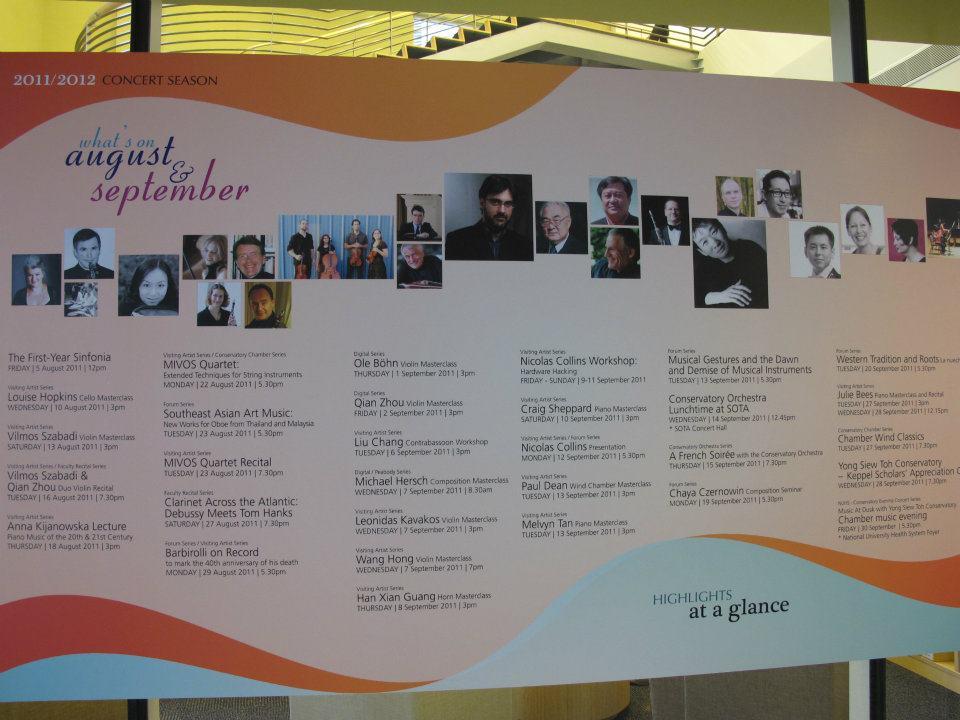
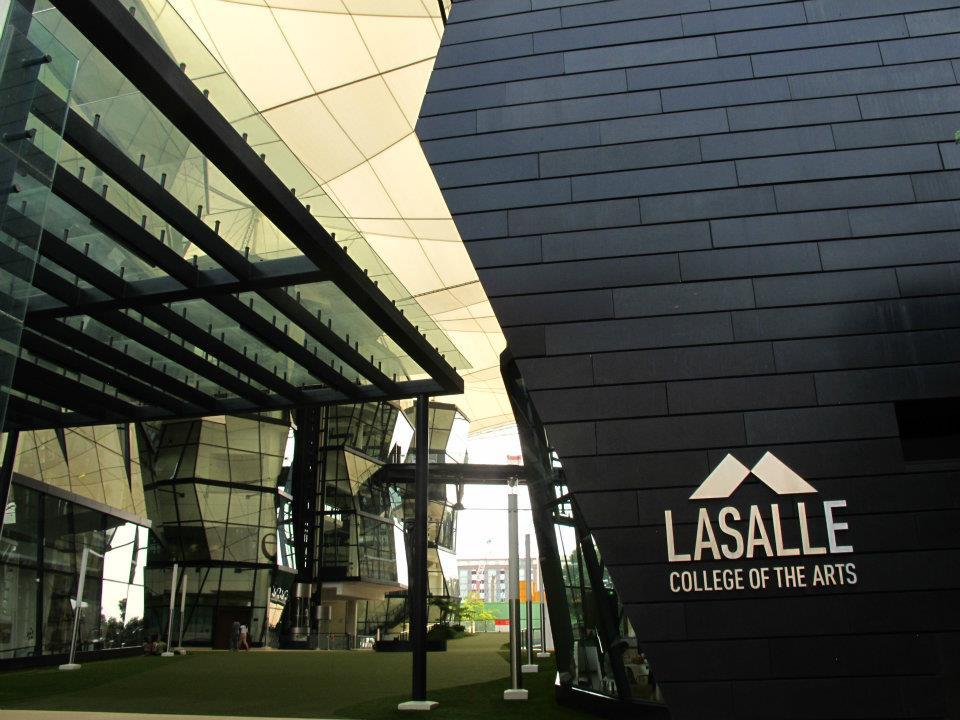
During 2011, Anna taught Master Classes at the Jakarta Conservatory, LaSalle College of the Arts, New Zealand School of Music, Victoria University of Wellington, University of Waikato, University of Otago in New Zealand and St. Thomas University in Manila. She was also invited to present a lecture-recital during the 5th Singapore Piano Pedagogy Symposium at the Yong Siew Toh Conservatory of Music, National University of Singapore.
Anna was featured in the "Chopin on the Rocks" concert with "one of the greatest revelations of polish jazz", Leszek Możdżer and Alizma.
October 2nd at the Springs Preserve, Las Vegas.
Anna was celebrating Fryderyk Chopin's 200th Birthday Year with musical appearances in many parts of the world. In June she was featured as soloist in two performances of Chopin’s Concerto No. 1 with the Sinfônica do Paraná in Curitiba, Brazil. She also taught a number of master classes in several venues: the Escola de Música e Belas Artes do Paraná, the Queensland Conservatorium in Brisbane, Australia, the Australian National University in Canberra and the Music Conservatory in Hobart, Tasmania, among others. She appeared in a number of live broadcasts on radio and television, not only in Brazil and Australia but in New Zealand as well. In addition, Anna gave over a dozen solo recitals in Curitiba, Brasilia,Chirstchurch, Te Anau, Brisbane, Canberra, Sydney and Hobart throughout June, July and August.
Anna opened the 2010 season with a joint recital featuring acclaimed violinist Ayano Ninomiya, at the Polish Consulate in New York City. The program celebrates Grazyna Bacewicz's music, in commemoration of the 100th anniversary of her birth in 2009. The same concert was presented at UNLV in Las Vegas on February 18th, in Doc Rando Hall.
On March 21, Anna collaborated with another esteemed musician, pianist Blair McMillen of Da Capo Players. This program included the famous Fantasty in f minor for Four Hands by Schubert, as well as a piece by contemporary composer Fredrick Kaufman titled, "Yin and Yang: A Dialogue for Two Grand Pianos." The concert will take place at UNLV. Later in the summer, Anna presented a solo recital of contemporary music (compositions by Lei Liang, Fredrick Kaufman, Virko Baley, and Jason Thorpe Buchanan) at the La Salle Music Academy in Singapore.
Anna celebrated the Chopin Year with solo recitals, lectures and master classes all over the world including the USA and Europe. She gave lectures and master classes at Bard College in NY and for the Music Teachers National Association in Las Vegas, Newport News and Maryland. She was also invited to serve as a juror for the Chopin Competition in Jakarta, Indonesia.
Anna has been appointed a visiting professor at the UNLV in Las Vegas.
In October she celebrated the birthdays of two prominent living composers: Henryk Mikolaj Gorecki and Virko Baley. She performed Gorecki’s piano concerto at the Polish Composers Festival in Bielsko-Biala, Poland and Baley’s Klytemnestra at UNLV in Las Vegas.
Anna will returned to Harvard University on October 25, to present an evening of music by Karol Szymanowski. There were performances, talks and a documentary movie by Dagnara Drzazga. The same program was once again held in the Polish Consulate in NYC, on October 28.
On November 19th Anna celebrated 90 years of Polish Independence at the Corcoran Museum in Washington DC featuring the music of Chopin, Paderewski, Bacewicz and Szymanowski.
Anna also appeared on the Ewell Concert Series at the College of William and Mary with the esteemed violinist, Charles Castleman on November 15th.
News from Asia:
Anna spent most of the summer of 2008 in Thailand, where she taught, performed and scuba-dived. She appeared on Thai TV and gave master-classes for the Bangkok Chopin Society. She also visited Angkor Watt in Cambodia and was moved by the beauty of the Kingdom and the unspoiled land.
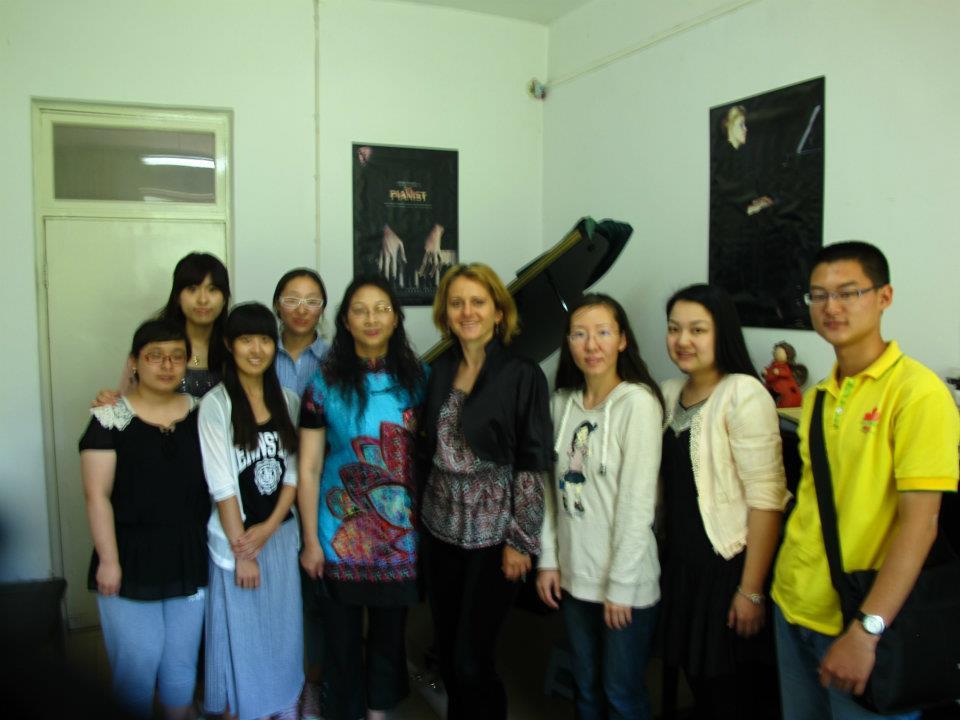
In January Anna presented master-classes and recitals in Hong-Kong (Baptist University) and Singapore (Nanwang Academy of Fine Arts).
Anna was invited to present a solo recital at the prestigious National Gallery series in Washington, D.C. on June 8.
The same program was presented at the College of William and Mary (April 27th), Forte’s Salon in New Haven (May 1) and the Polish Society at Harvard University (May 2.)
Press Coverage of the Events:
HamptonRoads.com
The DoG Street Journal
Anna was also invited to perform for the LIKHA'T DIWA Foundation in Las Vegas on May 17. The proceeds will benefit music students in the USA and Philippines.
Anna was named “one of the world’s greatest pianists†by the Indian PRWire, after an eclectic collaborative performance entitled “East meets West,†with Chakrapani Singh on the geet’ar and Vinod Pathak on the tabla. The performance and the master class took place at Alliance Francaise in New Delhi, India in January, and it was reviewed by the Times of India.
On the same trip Anna visited Nepal and the Himalayas, and she successfully reached the Mt. Everest Base Camp.
The Polish-American pianist Anna Kijanowska (key-en-OFF-ska) has established herself as a multi faceted musician, smoothly transitioning among her roles as a performing and recording artist, pedagogue, coach, and advocate of contemporary classical music around the world. She has performed, taught and collaborated in North and South America, Asia, Europe, New Zealand, Africa and Australia.
Hailed by The New York Times (2007) as "an excellent young Polish pianist," and by Brazilian critics as “the Tina Turner of classical music” (2010), Kijanowska’s concert performances represent the stunning diversity of today’s globalized classical music scene; she is equally at home performing in Carnegie Hall as the steppes of Mongolia. Her New York debut took place in 1997 with a live broadcast over WQXR, and she has to date appeared in Carnegie Hall, Merkin Hall (NYC), and the Kennedy Center and National Gallery of Art in Washington, D.C, as well as in underserved venues such as the Amazon basin in Brazil, the Himalayas in Nepal, and Mongolia.
Kijanowska’s recording of The Complete Mazurkas by Szymanowski (Dux 417) was recently praised by Adrian Corleonis of Fanfare Magazine "as superior to any other interpretations that came before or after her" and received favorable reviews on both sides of the Atlantic from the New York Times and BBC Magazine. Mr. Leonard of All Music Guide wrote, "Kijanowska's performances are amazingly virtuosic, astonishingly charismatic, astoundingly empathic and completely compelling," while Mr. Muse of the Classik Reviews called her performance a “revelation.”
As a concerto soloist, recitalist and chamber musician, she has appeared in major festivals in Europe, including the Kiev Festival and the Polish Composers Festival under the patronage of Henryk Mikolaj Górecki, as well as at the Quartet Program at Bucknell University and SUNY Fredonia in New York. She has collaborated on these projects with several other renowned musicians, including violinists Charles Castleman, Sharon Roffman, and Ayano Ninomiya of Ying Quartet, pianist Blair McMillen of the Da Capo Chamber Players, and jazz pianist Leszek Możdżer. She has also been heard on WQXR in NYC, WNYC in New York, Chicago Radio, Radio New Zealand, SBS National Public Broadcasting in Australia, and has performed for television audiences in Poland, Ukraine, Brazil, Australia, New Zealand and Thailand.
Kijanowska is particularly passionate about presenting Polish music to the world. She has been frequently invited as a visiting artist at Polish Embassies and Consulates around the world. She is also widely known as a promoter and elaborator of contemporary music. She has been involved in a number of international premiers and she works with living composers on a regular basis. Kijanowska’s repertoire spans from the 16th to the 21st century, and includes rarely-performed gems of Polish repertoire, such as the Piano Concerto by Lutosławski, as well as major works by Chopin and Górecki.
As an internationally recognized music educator, Kijanowska has been invited to present master classes, recitals and lectures at leading universities and conservatories around the world, including the Yong Siew Toh Conservatory of Music at the National University of Singapore, Nanyang Academy of Fine Arts and LaSalle College of Arts in Singapore, Frankfurt University of Music and Performing Arts in Germany, the Sydney Konservatorium, the Chinese Conservatory in Beijing and the Xinghai Conservatory of Music in Guangzhou, China, New Zealand School of Music at the Victoria University of Wellington, in New Zealand, Australian National University in Canberra, Yayasan Pendidikan Musik Conservatory in Jakarta, Indonesia, North-West University in South Africa, the Conservatory in Lima, Peru, St. Thomas University in the Philippines, the Universities of Arizona, Utah, Nevada, Virginia and California, Bard College in New York, and Harvard University in Cambridge, among others.
She has also been invited as an adjudicator for a number of competitions worldwide, including the Yamaha Piano Competition, in Guangzhou, China, the Chopin piano competitions in Indonesia and Singapore as well as the MTNA and the Washington International Competition in the USA.
A winner of several national and international competitions herself, Kijanowska has received grants from the Kosciuszko Foundation, Jewish Foundation for Education of Women, the Madeleine Forte Foundation, the Manhattan School of Music in New York City and the Batory Foundation in Poland.
As a producer, Kijanowska focuses on promoting Polish and contemporary music with projects including a Szymanowski concert at Merkin Hall in New York City in 2007, which attracted the attention of esteemed pianist Krystian Zimerman. She has also presented innovative recital projects incorporating contemporary music with traditional repertoire (From Liszt to Liang, 2011) or fusion of musical styles (jazz with pianist Leszek Możdżer and Harris Simon) to audiences around the world. Kijanowska’s interest in the synthesis of arts and media has resulted in several projects combining music, visual arts, dance,poetry and photography.
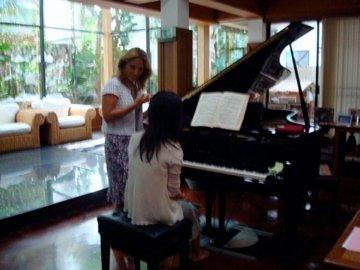
Ms. Kijanowska began her musical education in Bielsko-Biała, Poland and she attended the Szymanowski Music Academy in Katowice, under the tutelage of Prof. Józef Stompel. After receiving her Master of Music Degree in Piano Performance and Pedagogy from the Music Academy in Wrocław, she was awarded a scholarship to study with Dr. Madeleine Forte (pupil of Alfred Cortot, Rosina Lhevinne and Wilhelm Kempff) at Boise State University in the United States. She holds a Doctorate and a Master of Music in Piano Performance from the Manhattan School of Music in New York, where she studied with Byron Janis (pupil of Vladimir Horowitz and Rosina Lhevinne), Mykola Suk (pupil of Lev Vlasenko), Sara Davis Buechner (pupil of Rudolf Firkušný and Mieczysław Munz) and Marc Silverman.
Ms. Kijanowska is currently a faculty member at the Music Institute in the Fine Arts Department of the University of Silesia in Cieszyn, Poland. She is a former faculty member of the College of William and Mary and University of Richmond in Virginia, the University of Virginia in Charlottesville, the University of Nevada in Las Vegas, The Castleman Quartet Program, the Levine School of Music, and the Washington International Piano Festival in Washington D.C.
Kijanowska’ s diverse interests in music and the arts parallel her love for nature and adventure.She is equally comfortable hiking in the Himalayas at 5000 meters, or 25 meters below sea level diving with sharks. An avid hiker, she has reached the Everest Base Camp, completed the Annapurna , Kanchanjunga and Langtang treck in Nepal, and hiked the Huayhuash Circut in the Peruvian Andes. She also enjoys horseback riding, yoga, running, biking and kayaking.
Reviews
Kijanowska's performances are a revelationPhil Muse Classik Reviews
Kijanowska is a pianist I look forward to hearing again—and again.
Adrian Corleonis Fanfare Magazine
Kijanowska's performances are amazingly virtuosic, astonishingly charismatic, astoundingly empathic, and completely compelling.James Leonard All Music Guide
read more
read more
Kijanowska can play with notable vitality or with abundant subtlety and nuance, or anything between.Stereophile
...Astonishing capabilities and professionalism of a true artistCarolyn Philpott Mercury, Australia
Anna Kijanowska is a beautiful pianist, superb teacher, and a lovely human being.
I found her to possess a highly imaginative and intuitive musical mind.Byron Janis
I found her to possess a highly imaginative and intuitive musical mind.
Ms. Kijanowska is an exceptional artistCharles Castleman violinist
Anna is a superb pianist. She is a pianist of exceptional ability, virtuosic mastery and musical sophistication.
Sara Davis Buechner pianist
One of the world’s greatest pianistsIndianPRwire, New Delhi, India
Anna Kijanowska at St Martin's-in-the-Fields , LondonKumi & Lionel Smith-Gordon Breinton Recital Society, London
read more
read more
Two Excellent Pianists - Hamelin & KijanowskaArthur Leaonart Leonard Link, New York
read more
read more
More CD ReviewsVarious
read more
read more
"From Mazurkas to Techno" (...) an extraordinary program, delivered from start to finish with brilliance, sensitivity, and a wonderful sense of elan.John Moore The College of William and Mary
read more
read more
Press
Piano recital to pay homage to composer Karol SzymanowskiYale University
read more
read more
Pianist returns to W&M after world tourErin Zagursky The College of William and Mary
read more
read more
KIJANOWSKA CELEBRATES SZYMANOWSKIPolish Music Center, University of California
read more
read more
‘Tina Turner’ Of Classical Music In ChristchurchScoop Media, Christchurch, New Zealand
read more
read more
Kijanowska prepares for New York debutErin Zagursky The College of William and Mary
read more
read more
Ode To Joy Brings Christchurch Rebuild HopePR.CO.NZ, New Zealand
read more
read more
Anna Kijanowska in Recital: Drive Blues. Avant Garde Music by Polish and International ComposersSydney, Puls Polonii
read more
read more
Homage to Karol SzymanowskiRichard Porebski Polish American Journal
read more
read more
Other Press
This unique CD presents 25 mazurkas by 20 different composers commissioned by Polish-American pianist Anna Kijanowska for her project aimed at preserving and reviving the art of the Polish mazurka.
Mazurkas have a long and storied history. Contrary to popular belief, the word “mazurka” did not originate in Poland. It is a Western term used to describe three similar but distinct Polish folk dances in triple meter—mazur (or mazurek), oberek, and kujawiak. These dances were known as early as the 16th century, but the word “mazurka” first appeared in Joseph Riepel’s music dictionary, published in Germany in 1752. Originating in the Mazovia region of central Poland, the mazurka evolved from a lively folk dance into one of the defining musical genres of the Romantic era. It is distinguished by its triple meter, characteristic accents on the second or third beat, and rhythmic flexibility inherited from folk performance. By the late 18th century, the dance had become a favorite of the Polish nobility and soon spread throughout Europe, where composers began producing stylized mazurkas for the salon and concert hall.
The mazurka reached its artistic pinnacle in the hands of Frédéric Chopin, who transformed its Polish dance rhythms into a deeply personal and sophisticated art form combining harmonic innovation, rhythmic subtlety, and emotional depth. While Chopin remains the undisputed king of the mazurka, many other prominent composers made worthy contributions to the genre, among them Szymanowski, Paderewski, Tchaikovsky, Liadov, Scriabin, Dvořák, Debussy, and many others.
Very popular in the 19th and early 20th centuries, the mazurka fell into obscurity soon after World War II, and Anna Kijanowska’s project attempts to revitalize the genre. She has assembled a truly international cast of composers for this album. They come from the United States (Jeremy Gill, Matthew Bengtson, David Rakowski, Nils Vigeland, John Muniz), Israel (Avner Dorman), Colombia (Carolina Noguera Palau), Ukraine (Lyudmila German), Switzerland (Thomas Fortmann), New Zealand (Anthony Ritchie), Afghanistan (Milad Yousufi), Germany (Thomas Bloch Bonhoff), and, of course, Poland (Mikołaj Piotr Górecki, Łukasz Woś, Agnieszka Lasko, Małgorzata Kaniowska, Hanna Kulenty, Karol Pyka, Mikołaj Stroiński, Wojtek Blecharz).
Only eight of the 20 composers on this album have entries in the Fanfare Archive, and none of them can be considered household names. Łukasz Woś, Avner Dorman, and Mikołaj Piotr Górecki (son of Henryk Górecki) were the only three composers familiar to me. Nevertheless, the music on this CD is of high artistic quality and offers a wide variety of styles. We have the quite Chopinesque entries by M. P. Górecki and Agnieszka Lasko, Impressionistic works by Lyudmila German and Hanna Kulenty, the Jazz Mazurka by Karol Pyka, the sonoristic Mazurka for Solo Piano by Carolina Noguera Palau, the polystylistic Three Mazurkas by Thomas Fortmann, and the avant-garde Mazurka for Piano and 3 Wireless Speakers by Wojtek Blecharz, as well as Grenzland by Thomas Bloch Bonhoff. The size constraints of a single review do not allow me to discuss each composition in detail, but while this album may not contain any groundbreaking masterpieces, all the pieces are well crafted, lively, and entertaining.
It is hard to imagine these mazurkas being played any better. Kijanowska is an accomplished pianist, educator, and champion of Polish music. She is a graduate of the Karol Szymanowski Academy of Music in Katowice, the Karol Lipiński Academy of Music in Wrocław, and Boise State University. She holds a doctorate and a Master of Music in Piano Performance from the Manhattan School of Music in New York and currently is a professor of piano at the University of Silesia in Cieszyn, Poland. Kijanowska has a special affinity for mazurkas, having previously recorded an album of Szymanowski’s complete mazurkas (DUX 0417), which was enthusiastically reviewed in 29:6 by Adrian Corleonis, and another disc, Polish Mazurkas (DUX 1868), which was not reviewed in Fanfare.
The recorded sound is rich and vivid. The CD comes in a tastefully designed digipak with an informative booklet in English and Polish and provides almost 78 minutes of pure delight. Recommended without any reservations. Anton AngeloAnton Angelo Fanfare Magazine 50:2 (Nov/Dec 2026)
Mazurkas have a long and storied history. Contrary to popular belief, the word “mazurka” did not originate in Poland. It is a Western term used to describe three similar but distinct Polish folk dances in triple meter—mazur (or mazurek), oberek, and kujawiak. These dances were known as early as the 16th century, but the word “mazurka” first appeared in Joseph Riepel’s music dictionary, published in Germany in 1752. Originating in the Mazovia region of central Poland, the mazurka evolved from a lively folk dance into one of the defining musical genres of the Romantic era. It is distinguished by its triple meter, characteristic accents on the second or third beat, and rhythmic flexibility inherited from folk performance. By the late 18th century, the dance had become a favorite of the Polish nobility and soon spread throughout Europe, where composers began producing stylized mazurkas for the salon and concert hall.
The mazurka reached its artistic pinnacle in the hands of Frédéric Chopin, who transformed its Polish dance rhythms into a deeply personal and sophisticated art form combining harmonic innovation, rhythmic subtlety, and emotional depth. While Chopin remains the undisputed king of the mazurka, many other prominent composers made worthy contributions to the genre, among them Szymanowski, Paderewski, Tchaikovsky, Liadov, Scriabin, Dvořák, Debussy, and many others.
Very popular in the 19th and early 20th centuries, the mazurka fell into obscurity soon after World War II, and Anna Kijanowska’s project attempts to revitalize the genre. She has assembled a truly international cast of composers for this album. They come from the United States (Jeremy Gill, Matthew Bengtson, David Rakowski, Nils Vigeland, John Muniz), Israel (Avner Dorman), Colombia (Carolina Noguera Palau), Ukraine (Lyudmila German), Switzerland (Thomas Fortmann), New Zealand (Anthony Ritchie), Afghanistan (Milad Yousufi), Germany (Thomas Bloch Bonhoff), and, of course, Poland (Mikołaj Piotr Górecki, Łukasz Woś, Agnieszka Lasko, Małgorzata Kaniowska, Hanna Kulenty, Karol Pyka, Mikołaj Stroiński, Wojtek Blecharz).
Only eight of the 20 composers on this album have entries in the Fanfare Archive, and none of them can be considered household names. Łukasz Woś, Avner Dorman, and Mikołaj Piotr Górecki (son of Henryk Górecki) were the only three composers familiar to me. Nevertheless, the music on this CD is of high artistic quality and offers a wide variety of styles. We have the quite Chopinesque entries by M. P. Górecki and Agnieszka Lasko, Impressionistic works by Lyudmila German and Hanna Kulenty, the Jazz Mazurka by Karol Pyka, the sonoristic Mazurka for Solo Piano by Carolina Noguera Palau, the polystylistic Three Mazurkas by Thomas Fortmann, and the avant-garde Mazurka for Piano and 3 Wireless Speakers by Wojtek Blecharz, as well as Grenzland by Thomas Bloch Bonhoff. The size constraints of a single review do not allow me to discuss each composition in detail, but while this album may not contain any groundbreaking masterpieces, all the pieces are well crafted, lively, and entertaining.
It is hard to imagine these mazurkas being played any better. Kijanowska is an accomplished pianist, educator, and champion of Polish music. She is a graduate of the Karol Szymanowski Academy of Music in Katowice, the Karol Lipiński Academy of Music in Wrocław, and Boise State University. She holds a doctorate and a Master of Music in Piano Performance from the Manhattan School of Music in New York and currently is a professor of piano at the University of Silesia in Cieszyn, Poland. Kijanowska has a special affinity for mazurkas, having previously recorded an album of Szymanowski’s complete mazurkas (DUX 0417), which was enthusiastically reviewed in 29:6 by Adrian Corleonis, and another disc, Polish Mazurkas (DUX 1868), which was not reviewed in Fanfare.
The recorded sound is rich and vivid. The CD comes in a tastefully designed digipak with an informative booklet in English and Polish and provides almost 78 minutes of pure delight. Recommended without any reservations. Anton Angelo
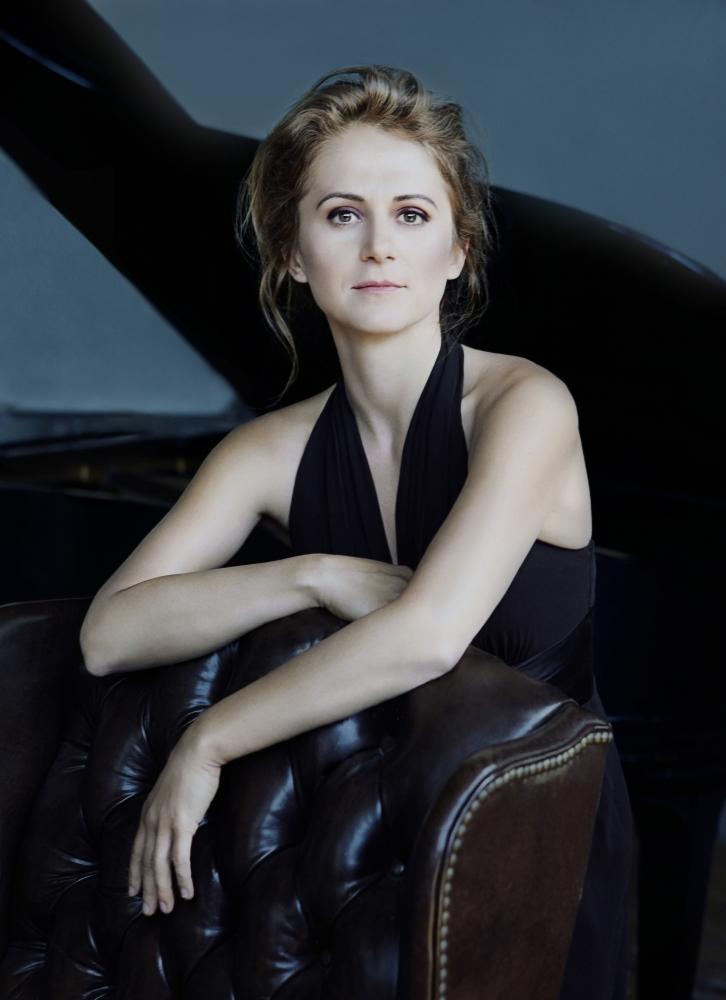
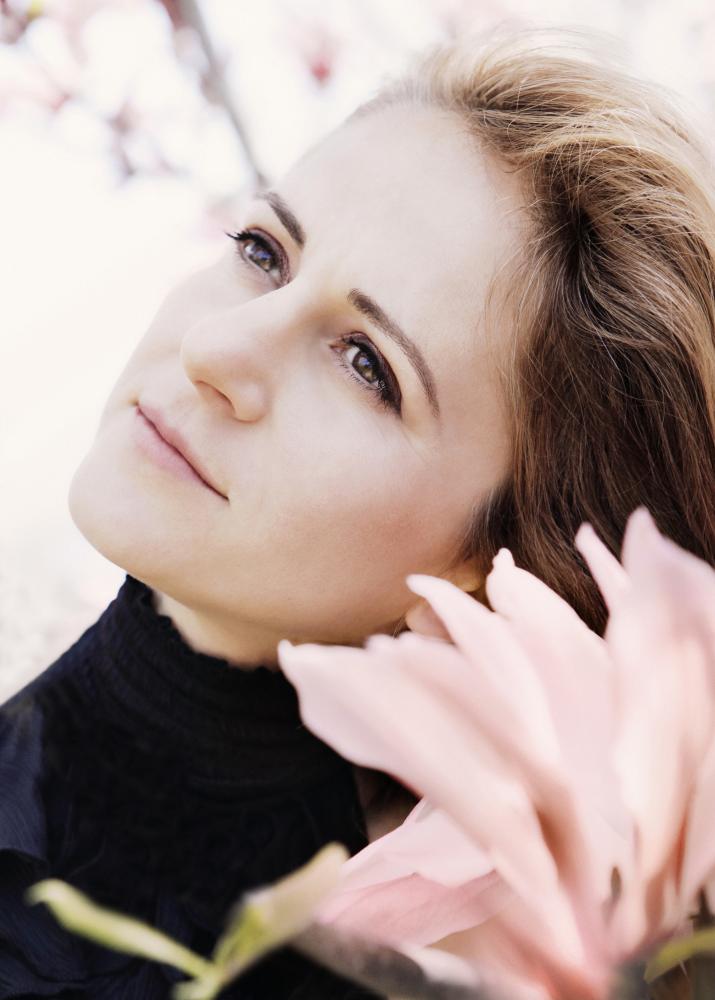
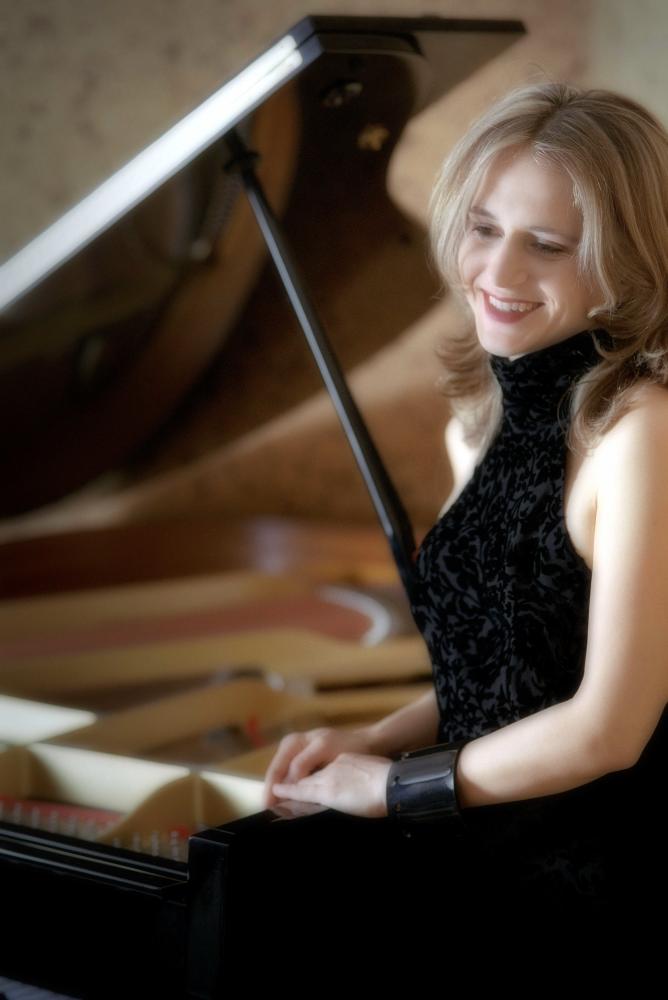
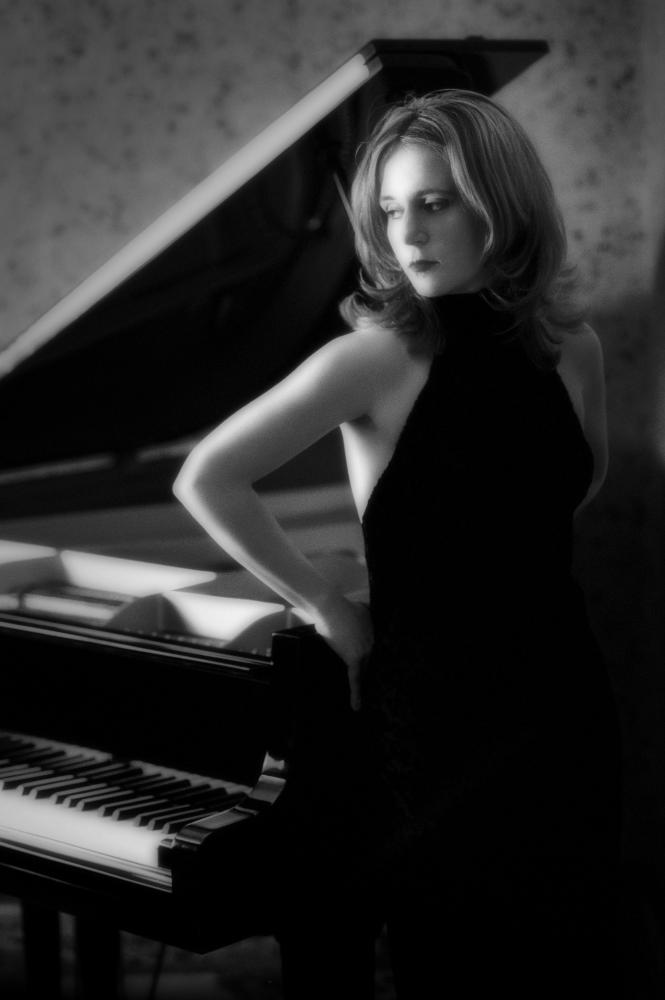
Publicity Photos






NEWS:
Martyna Uchman, University of Silesia, ( BA Class of 2025) wins the first prize of the International Music Competition -Międzynarodowy Konkurs Interpretacji Muzycznej „Przestrzenie Interpretacji” in Częstochowa, 14.06. 2025 and is accepted into two top graduate programs in Poland: Music Academy in Katowice and in Bydgoszcz. Bravo!
Anna Kijanowska has become the artistic director and the founder of the 1st MusicAlive International Piano Competition Online. Don't miss the deadline! INFO: http://www.wpta.info/poland/ipc/
Anna joins Australian-based teaching company Aeyons.com. To book a session please visit: https://online.aeyons.com/anna_kijanowska
Dr. Kijanowska named the first President of the World Piano Teachers Association -Poland. (http://www.wpta.info)January, 2019. The WPTA-Poland presidency has been extended to January 2021.
International Masterclasses at the University of Silesia, Cieszyn June 4-8, 2019!
https://wp.me/p4FzzT-l
Dr. Kijanowska become an artistic and executive director of the II International Conference-New Voices in Music, June 6-7, 2019 at the University of Silesia in Cieszyn. (https://wordpress.com/post/newvoicesinmusicconference.wordpress.com/27)
Dr. Kijanowska has been invited as a jury member to the 2nd Nashvile International Piano Competition and the 64th Kosciuszko Foundation CHOPIN Competition in New York.
A student of Dr. Kijanowska, William Hume, has been named a prize winner of the 2013 American Protege International Piano Competition in New York City as well as several other competitions . He has apeared as a soloist with orchestras and have performed at Carnegie Hall twice this year and has apeared on From The Top. He was also chosen to perform for master classes by John O'Conor and Paul Badura-Skoda in March 2013.
Dr. Kijanowska has been awarded a Diploma of Recognition by American Protege International Piano Competition for her educational achievements.
Teaching Biography.
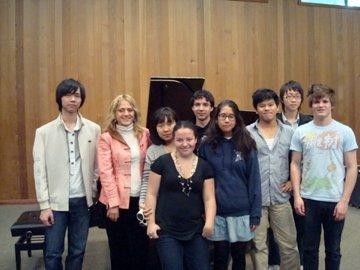
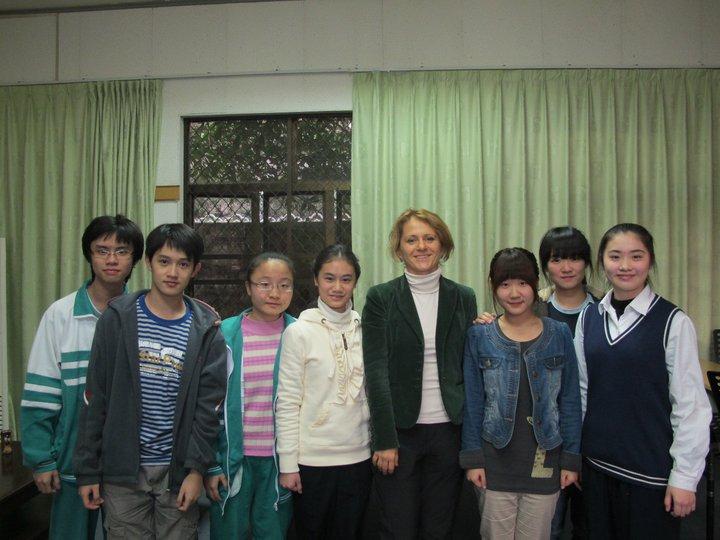
Dr. Anna Kijanowska is a passionate pedagogue and educator. She is sought after as a teacher, adjudicator, lecturer and performer. She has presented master classes, recitals and lectures at leading universities and conservatories around the world, including the Central Conservatory and Chinese Conservatory in Beijing, China; Yong Siew Toh Conservatory of Music at the National University of Singapore; Nanyang Academy of Fine Arts and LaSalle College of Arts in Singapore; Frankfurt University of Music and Performing Arts in Germany; the Sydney Konservatorium; the Xinghai Conservatory of Music in Guangzhou, China; the New Zealand School of Music at Victoria University of Wellington; Australian National University in Canberra; Yayasan Pendidikan Musik Conservatory in Jakarta, Indonesia; North-West University in South Africa; the Conservatory in Lima, Peru; St. Thomas University in the Philippines; the Universities of Arizona, Utah, Nevada, Virginia and California; Bard College in New York; Yale University and Harvard University, among others.
She has been invited to present papers at international conferences, including the 5th and 6th Contemporary Piano Meetings in Portugal and Brazil (2021,2023) , 4th World Piano Conference in Novi Sad in 2012, and the 5th Singapore International Pedagogy Symposium in 2011. As an adjudicator, she was invited to join a number of national and international competitions, including the Washington International Competition and the Catholic University Concerto Competition in Washington, DC; the MTNA Competitions; the International Chopin Competition in Singapore; and the Yamaha Piano Competition in Guangzhou, China.
Dr. Kijanowska’s students have won numerous competitions, appeared on radio and TV, and performed with orchestras worldwide.
She earned a Master of Arts in Pedagogy from the Music Academy in Wroclaw (Poland), as well as a Doctorate and a Master of Music in Piano Performance from the Manhattan School of Music in New York, where she studied with the legendary pianist Byron Janis (pupil of Vladimir Horowitz and Rosina Lhevinne), Sara Davis Buechner (pupil of Rudolf Firkušný and Mieczysław Munz), and Mykola Suk (pupil of Lev Vlasenko). She has also studied with Dr. Madeleine Forte (pupil of Alfred Cortot, Rosina Lhevinne and Wilhelm Kempff) at Boise State University in Idaho.
Dr. Kijanowska is currently assistant professor at the University of Silesia in Poland and is a former faculty member of the College of William and Mary, Interharmony Festival in Italy and Germany, International Academy of Music (Italy), University of Richmond in Virginia, the University of Virginia in Charlottesville, the University of Nevada in Las Vegas, The Castleman Quartet Program, the Levine School of Music, and the Washington International Piano Festival in Washington D.C.
Teaching Philosophy:
“I strive to make each student a better musician and performer, and a more sensitive pianist. I share with students my love for music.â€
“I do not produce copies of myself, and I do not force my students to repeat my interpretation, but rather I encourage them to work on developing their own interpretation and musical personality.â€
“I never give up on a student, and always strive for reaching their highest, individual potential.â€
“Each of my students is an individual with a unique personality that requires attention and focus specific to their needs. Accordingly, I tailor my teaching style to compliment the student’s learning style. I strongly believe that every student is capable of learning and meeting their goals, and my motto for all of them is one that I learned from my own teacher, Byron Janis: ‘Everything is possible!’.â€
ANNA KIJANOWSKA
“Dr. Kijanowska is great because she guides us, but doesn’t hold our hands. She also has very high expectationsâ€
“ Prof. Kijanowska is an amazing teacher and performer. She definitely knows how to bring out the strengths of her students and strengthen their weaknesses in order to make them more confident in their playing. I really enjoy her great style of teaching. She is a great professor!â€
“This professor always pushes me to the limits of my learning and performing abilitiesâ€
“Dr. Kijanowska is demanding and exacting and expects every student to perform to the best
of their abilities.â€
“Anna Kijanowska is simply a fantastic piano teacher. Kijanowska possesses a deep knowledge of the finesses of both earlier and newer music. She has a rare familiarity and comfort with new music. Her abilities as a pianist and teacher are first-rate and I would recommend her for any serious piano student.â€
Students



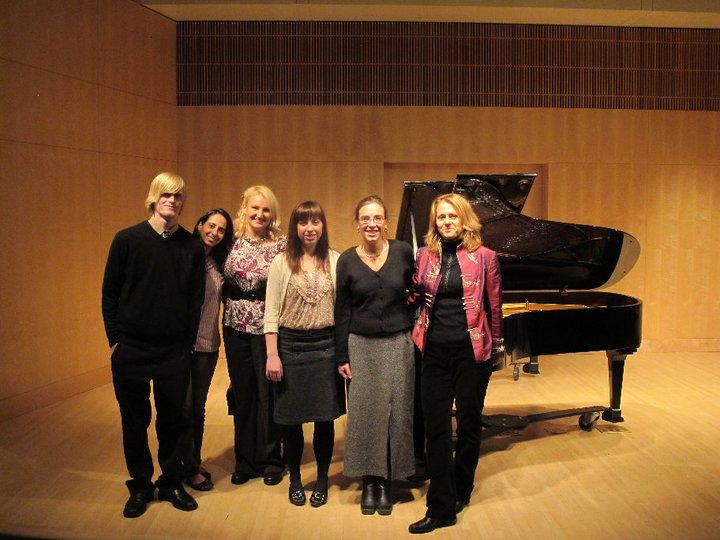
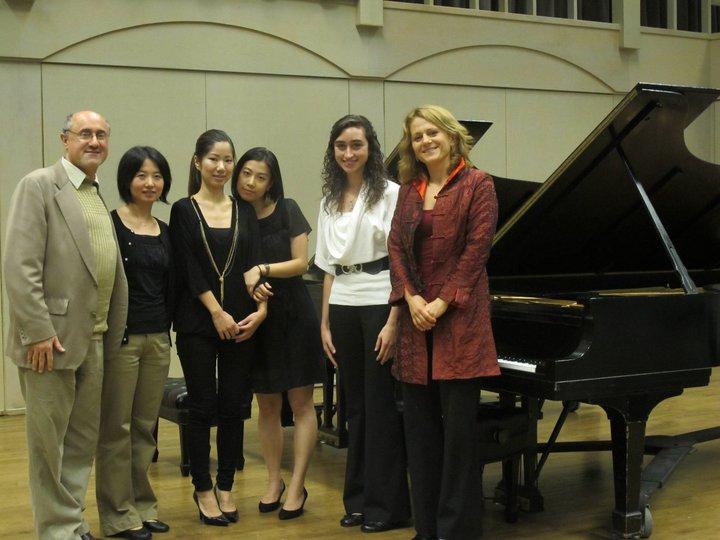

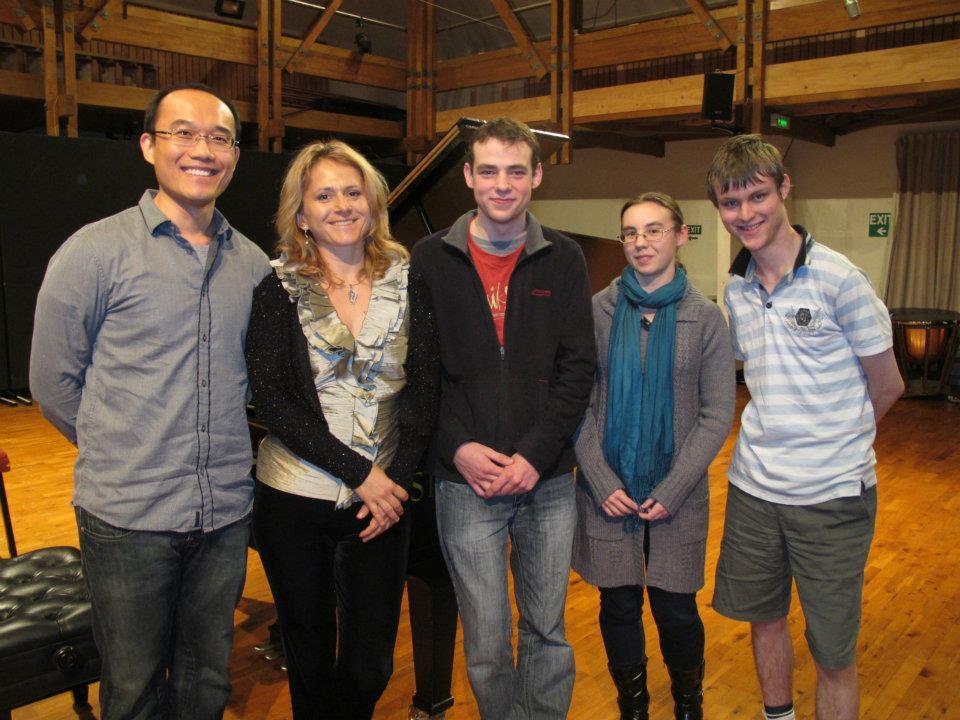






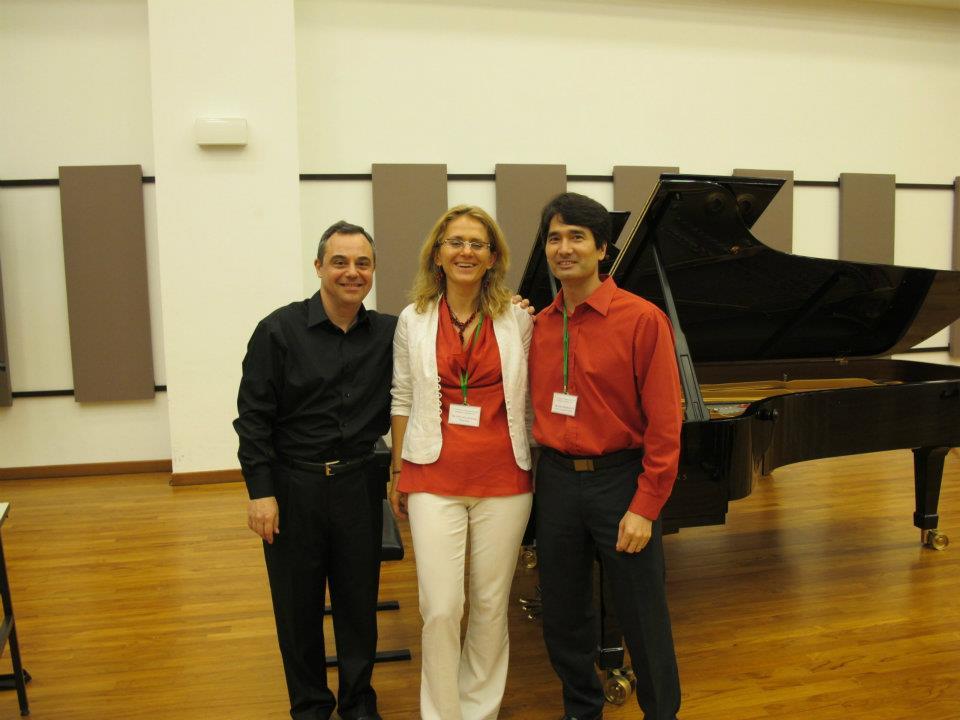
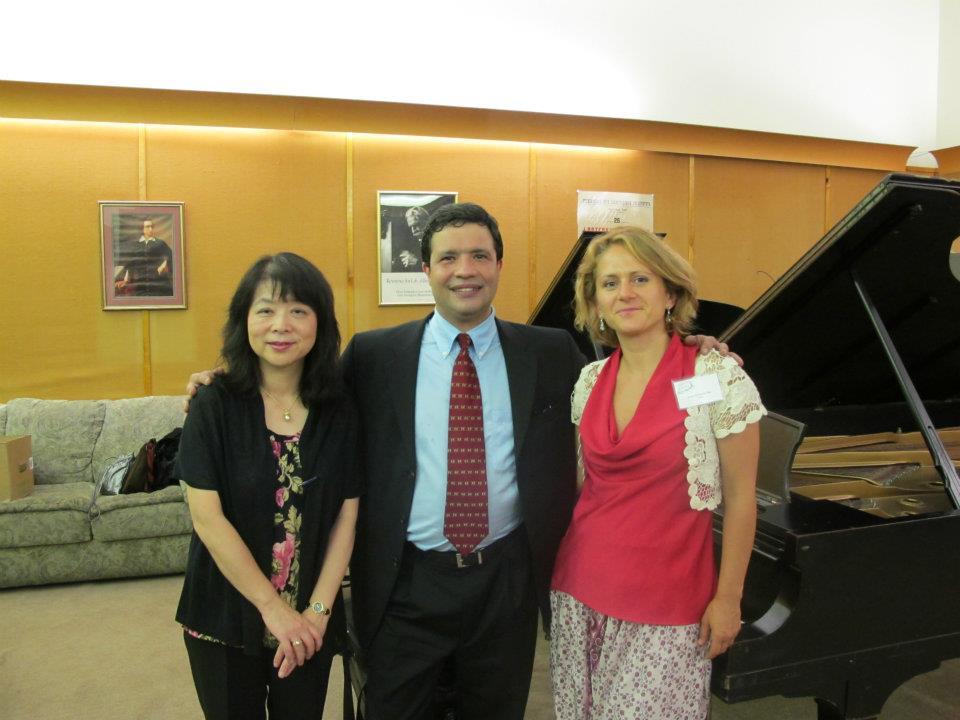
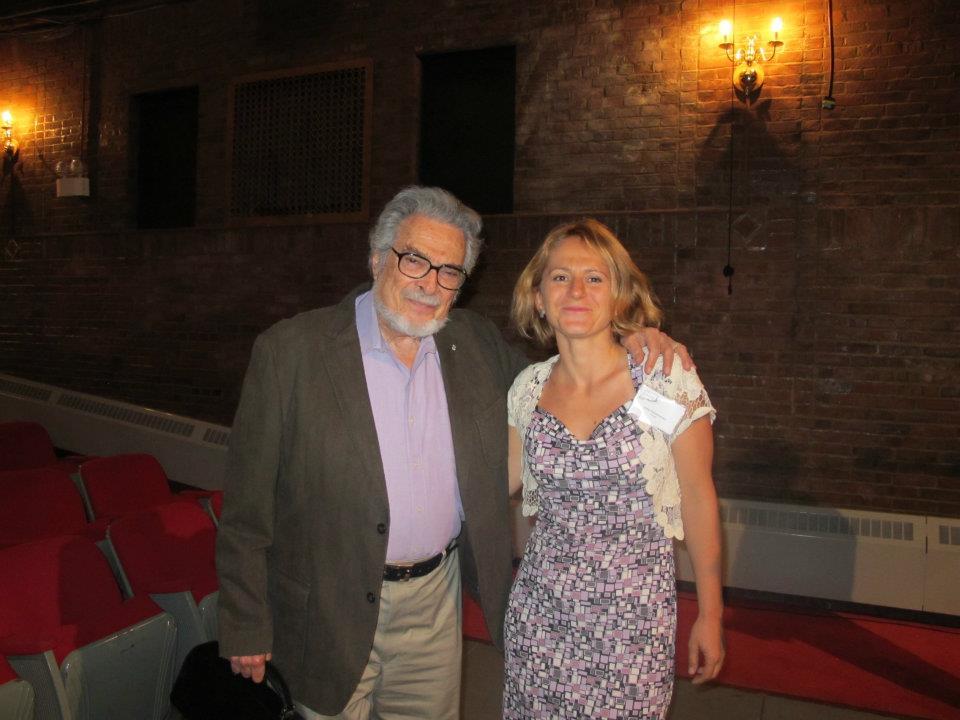
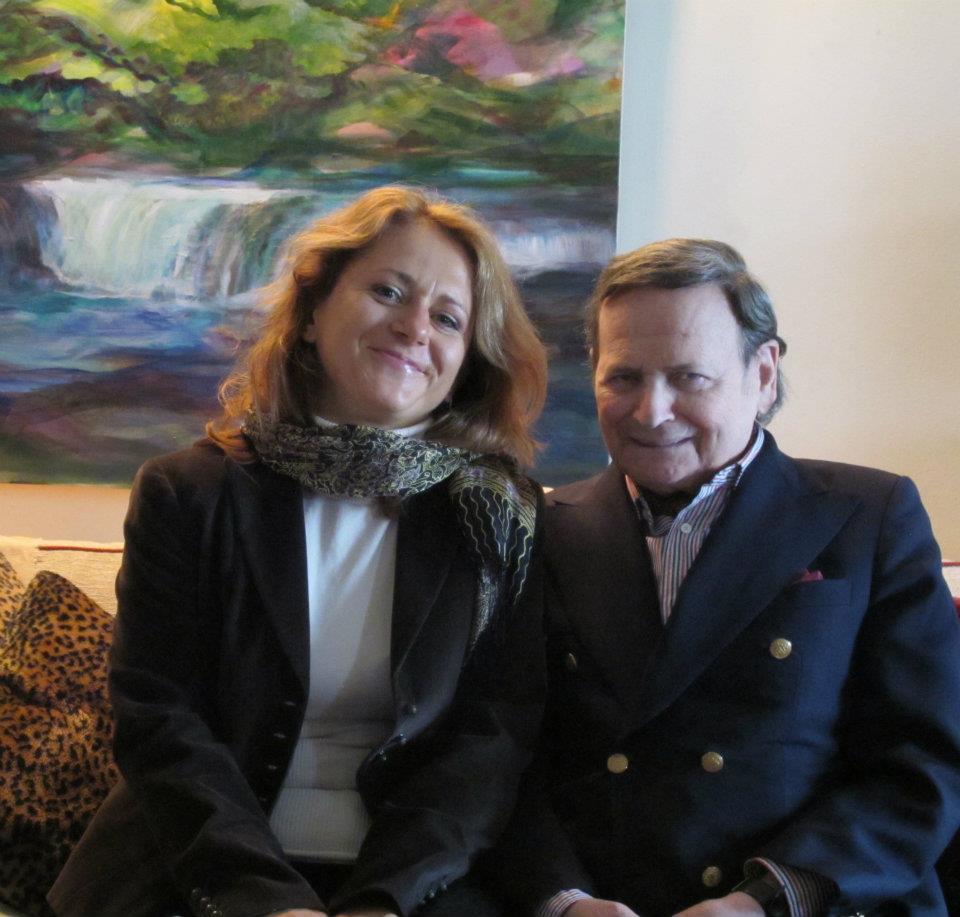
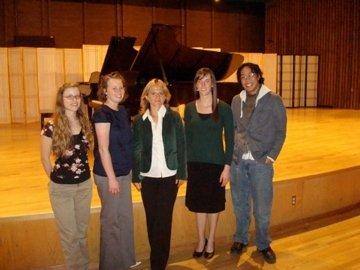
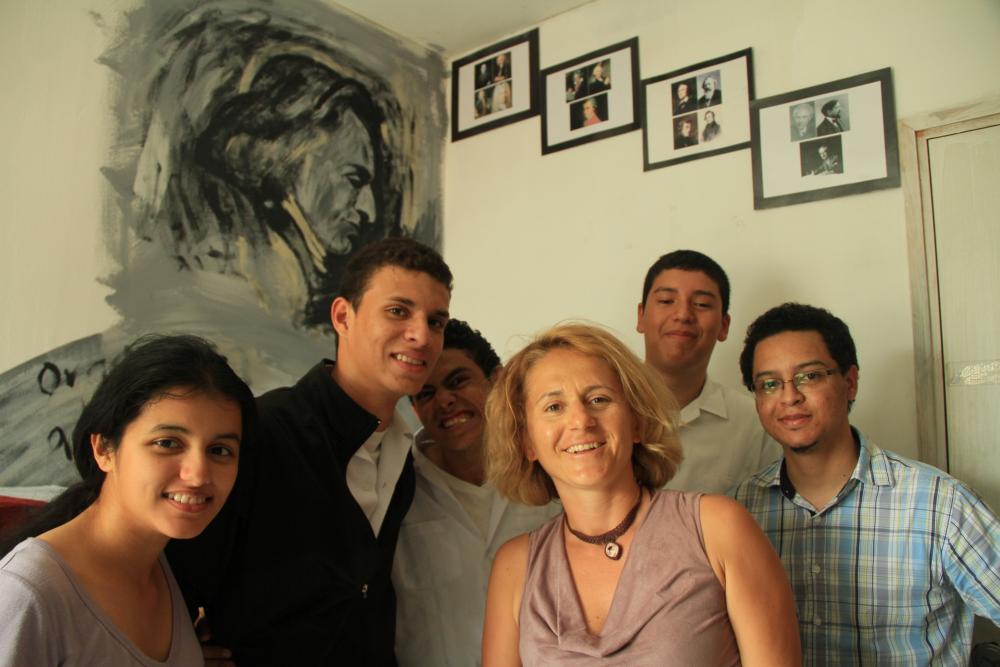
solo
Mazurka - Avner Dormann
Thomas Bloch-Bonhoff Grenzland. The Lost Mazurka for Anna Kijano
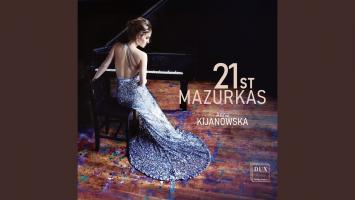
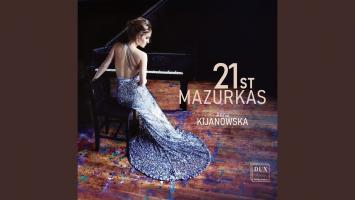
21st Mazurkas — 2025 DUX 2149

Roman Ryterband-Three Preludes: I. Andante, con grande espressio
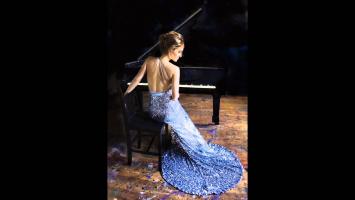
Szymanowski Mazurkas Ops. 50 & 62
Twenty Mazurkas, Op. 50
Two Mazurkas, Op. 62
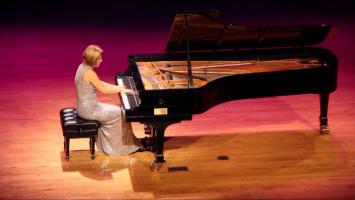
Chopin Mazurka in A Minor op. 17 no. 4
live
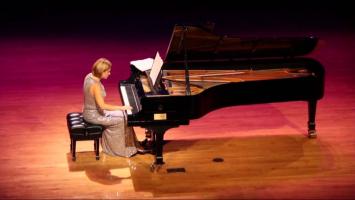
Lei Liang, My Windows, 4 " Pausing, awaiting the wind to rise"
live
Chamber Music

Roman Ryterband-Trois ballades hébraïques: I. La Reveur

Roman-Ryteband -Triptyque contemporain: I. Adagio appassionato
Orchestral Piano Concerto
SILESIA NEW EDEN PART 2 - YouTube
Solo
Mazurka - Avner Dormann
Thomas Bloch-Bonhoff Grenzland. The Lost Mazurka for Anna Kijano
21st Mazurkas — 2025 DUX 2149
Roman Ryterband-Three Preludes: I. Andante, con grande espressio
Szymanowski Mazurkas Ops. 50 & 62
Twenty Mazurkas, Op. 50
Two Mazurkas, Op. 62
Chopin Mazurka in A Minor op. 17 no. 4
live
Lei Liang, My Windows, 4 " Pausing, awaiting the wind to rise"
live
Concerto
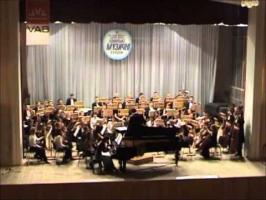
Lutoslawski Piano Concerto, mvt. 4 (excerpt)
Anna Kijanowska, Piano
Chernigov Orchestra, Ukraine
International Festival in Chernigov, Ukraine
April 2007
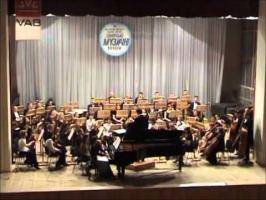
Lutoslawski Piano Concerto, mvt. 3 (excerpt)
Anna Kijanowska, Piano
Chernigov Orchestra, Ukraine
International Festival in Chernigov, Ukraine
April 2007
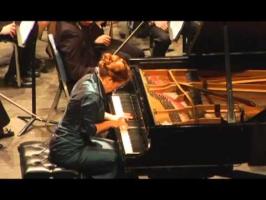
Bartok Piano Concerto no. 3 (exerpts)
William and Mary Symphony Orchestra
Other Videos

21st Mazurkas - YouTube@
The participating composers represent a wide range of musical languages—spanning academic contemporary music, film scoring, aleatoricism, minimalism, and traditional folk idioms—creating a rich mosaic of global perspectives on this deeply Polish form.
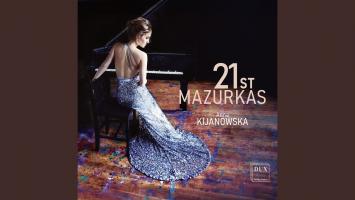
Carolina Noguera -Mazurka for Piano

Piano Sonata No. 2 - I. Maestoso -Grażyna Bacewicz

Esti Rofe and Krzysztof Kaczka, Flutes with Anna Kijaniowska pla

Piano Sonata in B minor, S. 178 - Franc Liszt

Piano Sonata No. 2 - Largo - Grażyna Bacewicz

Piano Sonata - Åukasz WoÅ›